CSOs’ remarks on Outputs of Annual Work Plan and Budget (AWPB) 2016 of NP-SNDD 2015-2017
Sihanoukville, 15-16 December 2015
By Soeung Saroeun,
Executive Director of Cooperation Committee for Cambodia (CCC)
Member of Steering Committee of Working Group for Partnership in Decentralization (WGPD)
Deputy Chair of Partnership Steering Committee for Implementation of Social Accountability Framework and member of TWG SNDD and
--------------------
Your Excellency Kitti Seddha Pundit Keat Chhon, Permanent Deputy Prime Minister, Deputy Chairman of NCDD;
Excellences ministers, secretary of states, undersecretaries of states, governors;
Representatives from implementing agencies, from Government Ministries and Institutions, Provinces, Districts and Municipalities, representatives from Civil society, and Development Partner colleagues,
Honored Guests, Ladies and Gentlemen!
It is my great honor to be here and to provide remarks at the National workshop on the Annual Work Plan and Budget (AWPB) 2016 of NP-SNDD 2015-2017.
On a behalf of the Cooperation Committee for Cambodia, Working Group for Partnership in Decentralization and CSOs who are working on Decentralization &Decentralization reform, I would like to express gratitude to NCDD for giving us an opportunity to participate in formulation process of AWPB 2016, particularly thanks to H.E Sak Setha and H.E Ngan Chamroeun for their leadership on this matter. Besides having an opportunity to present our general remarkswith you today; we, CSOs, jointly produced more detailed comments and recommendations on the outputs for AWPB 2016. We submitted them to NCDD on the 23rd of November and we are circulating them today. Also, we would like to praise NCDD for making significant achievement in D&D reform over the past several years and for improving a creation process of AWPB with inclusive and participatory approach.
We all understand that decentralization reform is about local democratic development and the people demand centered responses. Civil society believes that for a successful reform agenda on D&D,multi-stakeholder approachand engagement of each stakeholder is necessary, as they all possess valuable resources (technical, human and financial) that can make great contribution to the reform.CSOs have contributed a lot to national reconstruction/rehabilitation, socio-economic development, human rights and democracy in Cambodia over the past 35 years and most of our interventions were made to sub-national level and we wish to contribute more in 2016 and beyond. We hope and trust that Government will ensure and promote inclusive partnership and enabling environment for civil society particularly. We call Government to establish an effective mechanism for the clarification of LANGO, and amendment on the Law on election of members of National assembly , in order to provide more space for citizens to exercise freedom of expression, from which will benefit not only civil society but Cambodian society as whole.
Excellences, Ladies and Gentleman!
Please allow me to provide general comments on AWPB 2016 as follow:
- Communication and collaboration: Key for effective implementation of the IP3-II is communication and collaboration among stakeholders (NCDD, CSOs, DP, private sector and citizens). We endorse idea of developing Communication strategy and encouraging NCDD to start/continue with development from early 2016, with more active involvement of other stakeholders. We, also recommend establishing Partnership mechanisms among stakeholders involved in SNDD reform that would provide clearer understanding in what contents and processes (e.g. consultation/feedback, planning, implementation, resource mobilization and monitoring) who will be engaged, when and how. We are pleased that ISAF Partnership Steering Committee (PSC) has been established, and hoping that such example will be fallowed in a future as well. We are also recommending establishing joint committees that involve all stakeholders.
- ISAF - supply funds: For supply and demand side to work more synchronized in achieving greater social accountability, CSOs appeal to the Government to reconsider allocating more funds for supply side ISAF activities in order to reach more districts, matching the number of districts that will be supported by the demand side/CSOs during 2016.
To secure sustainable approach to social accountability, CSOs request from NCDD to make a long term funding commitment/budget allocation plan (at least three years in advance) for supply side in order to align with support from demand side. We believe that by 2019Government should be prepared to take an ownership on implementation of Social Accountability. - Accountability between BOG and Council on Provencal and District level: In some geographic areas accountability line between BOG and Council is not according to Law. Decisions are seem driven by political interest and by the ones who have stronger power. To overcome this issue we believe that model for monitoring accountability, implementation and enforcement should be designed and in place urgently.
- D/M and C/S fund: We appreciate Government commitment on financial transfer to sub-national level and hoping to see more progress on fiscal decentralization, in promotion of own source revenue generation that enable the exercise of local function for development and quality public service delivery. Besides that, transfer of D/M and C/S funds has to be strengthened. According to experience and information we possess, funds are transferred with delay, what has negative impact on activities and projects implementing in community. Funds within D/M and/or C/S budgets, allocated for social issues are not sufficient, what hinders the ability of SNA to effectively respond on them. Therefore, CSOs are demanding reviewing guidelines for planning and/or for budgeting in order to include recommendation that minimum 40% of DM budget should be allocated for social service starting from 2016.
Solving issues linked with D/M and C/S funds are very important and urgent so we are suggesting including those issues in priority areas for 2016. - Gender: According to Semi-Annual report 2015, there is no or just little improvement in gender mainstreaming has been reached (number of females on leaderships position decreased). We endorse Government initiative to complete regulations, guidelines and manuals that attend to improve current position and increase number of females working on SN level, and we are suggesting defining clear targets that should be reached by the end of 2016, to be able to create concrete and achievable action plan. To insure gender mainstream across all transferred functions CSOs are recommending engagement of Ministry of Woman Affairs in all dialogues about functional transfer. In the process of making decisions, developing guidelines, tools, strategies, etc. current female positions and actions for improvement have to be considered. As gender mainstream is very important CSOs believe that it should be included in priority areas for 2016.
- Functional transfer: CSOs are pleased to see that more functions are planned to be transferred and that previously transferred functions will be strengthening and extended to more districts. However, we see that the process of functional transfer is taking a long time and it is not according to plan, so we encourage Government to have more strategic approach to functional transfers and to focus on solving existing issues to enable functional transfer to go according to plan. To ensure that transferred services function well, we suggest transferring functions based on experiences and results of piloting those functions in some areas/levels. Further, it is very important to ensure that functional transfer is in line with funds transfer. As this is still a challenge, Government needs to find solutions to ensure synchronized transfer of funds and functions.
- Citizen Engagement: Citizens’ are playing a crucial role in democratic development of their community. Ability for their active participation in decision making process, resource mobilizations, monitoring the performance of service providers and other incidents has to be improved. Information flaw from local councilors to citizens has to be strengthened; transparency and public access of accurate and timely information has to be provided. Given such importance, CSOs strongly recommend that in support to the implementation of ISAF, it is mandatory for councilors in all levels of SNAs to ensure citizens’ awareness and access to open information. DMK database has to be well designed and implemented to ensure simple use by public and that provides all relevant and accurate information (e.g. policies, decision made by SN level, results of inspections; fund allocations and expenditure).
Excellences, Ladies and Gentleman
I would like to conclude my remark by reconfirming that the decentralization reform is about promoting local democratic development and the people demand centered responses. It needs a multi-stakeholder approach and environment that enable all actors to play their necessary roles in the reform process.
We trust that trough inclusive and participatory approaches so far, and duringthis two days we will create a plan where every stakeholder is enable to contribute their resources, have strong ownership and long term commitment, which iscrucial to make the reform more effective and to enable Cambodians/citizens improve their livelihood, and exercise their rights and potentials in 2016 and beyond.
Once again, on behalf of the civil society organizations, let me warmly thank you for allowing us to share our views, concerns and comments on the SNDD reform in this important workshop.
I,and my colleagues from civil society look forward to active participation and interactive discussions with you in next two days. I wish you and all Cambodians the best and success in your work and life.
Thank You!
Other Latest News
Statement of the International Conference on the 25th Anniversary of the 1991 Paris Peace Accords on Cambodia
We, the participants in the International Conference on the 25th Anniversary of the 1991 Paris Peace Accords on Cambodia (“the Paris Peace Agreements”), recall the importance of the obligations contained in the 1991 Paris Peace Agreements, which brought an end to decades of conflict and civil war in Cambodia, and laid the framework for a prosperous and peaceful future, based on human rights, participatory democracy, and the rule of law.
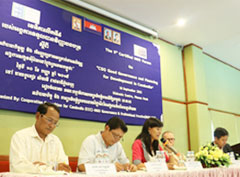
The 9th Certified NGO Forum on “CSO Good Governance and Financing for Development”
Phnom Penh, 10 September 2015: Around 100 - 120 participants from the CNGOs, GPP Applicant NGOs, development partners and private sectors joined The 9th Certified NGO Forum on “CSO Good Governance and Financing for Development” which held at Diakonia Center.
NGO Code, Voluntary Certification System for CSOs in Cambodia to be Revised
Phnom Penh (August 5, 2014) – Dr Sok Thim, Chairperson of Executive Committee of Cooperation Committee for Cambodia (CCC), called for support and active participants from CCC’s 147 members to promote the application of the Code of Ethical Principles and Minimum Standards for NGOs in Cambodia and Voluntary Certification System (VCS).
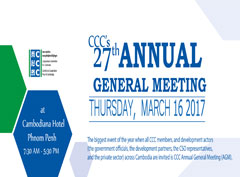
27th CCC Annual Meeting
នៅថ្ងៃទី១៦ ខែមីនា ឆ្នាំ២០១៧ អង្គការគណៈកម្មាធិការសហប្រតិបត្តិការដើម្បីកម្ពុជា(CCC) បានរៀប ចំកិច្ចប្រជុំ ប្រចាំឆ្នាំលើកទី២៧ ដែលកិច្ចប្រជុំនេះផ្តោតលើប្រធាន បទ សំខាន់ស្តីពី “ការលើកកម្ពស់កិច្ចសហប្រតិបត្តិការសម្រាប់អង្គការ សង្គមស៊ីវិលក្នុងការរួមចំណែកធ្វើមូលដ្ឋាននីយកម្មគោលដៅអភិវឌ្ឍន៍ប្រកបដោយចីរភាព“ ។ ពេលវេលា៖ ថ្ងៃទី១៦ ខែមីនា ឆ្នាំ២០១៧ ចាប់ពីម៉ោង ៨ព្រឹក រហូតដល់ ៥ ល្ងាច ទីកន្លែង៖ នៅសណ្ឋាគាកាំបូឌីយ៉ាណា រាជធានីភ្នំពេញ។
Civil Society Organizations Urge the Government to End Corruption
Phnom Penh (June 10, 2014) – The Civil society organizations (CSOs) of Cambodia have encouraged the government to implement their fight against corruption more quickly and efficiently.
Third CCC Members Bi-monthly Meeting 2015
Phnom Penh (October 16-17, 2015) – Around 150 senior representatives from Indonesia, the Philippines, Vietnam, and as well as Cambodia are attending the two-day workshop on Open Government Partnership which focuses on the following objectives . . .

“Together for a Better Future”
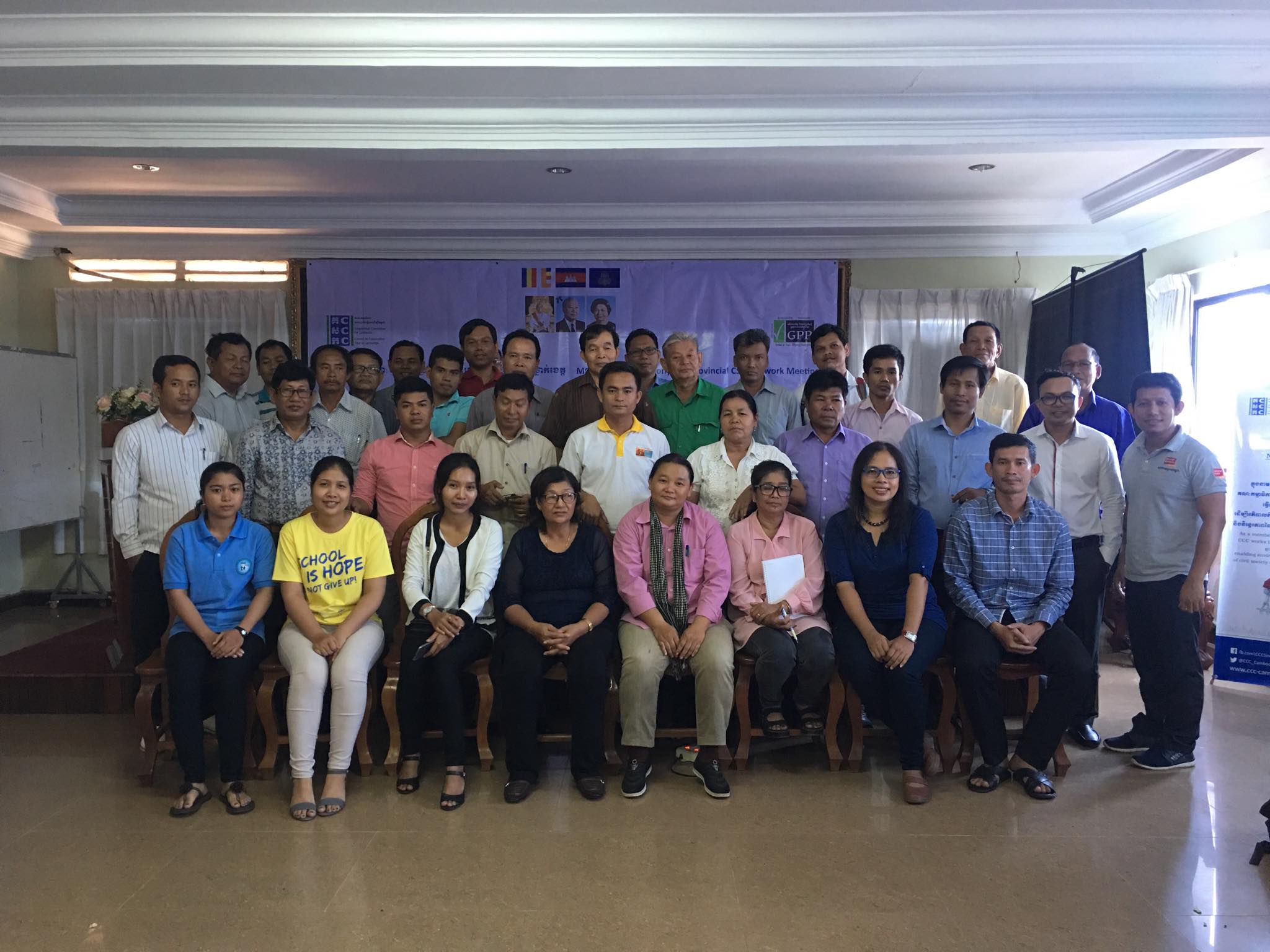
“Together for a Better Future” is our common goal. As confirmed across the provincial civil society networks of K.Chnang, Pursat, Battambang, P. Veng, S.Rieng, Kampot, Stung Treng, and Ratanakiri, their priorities are seen in common which include network strengthening,...